

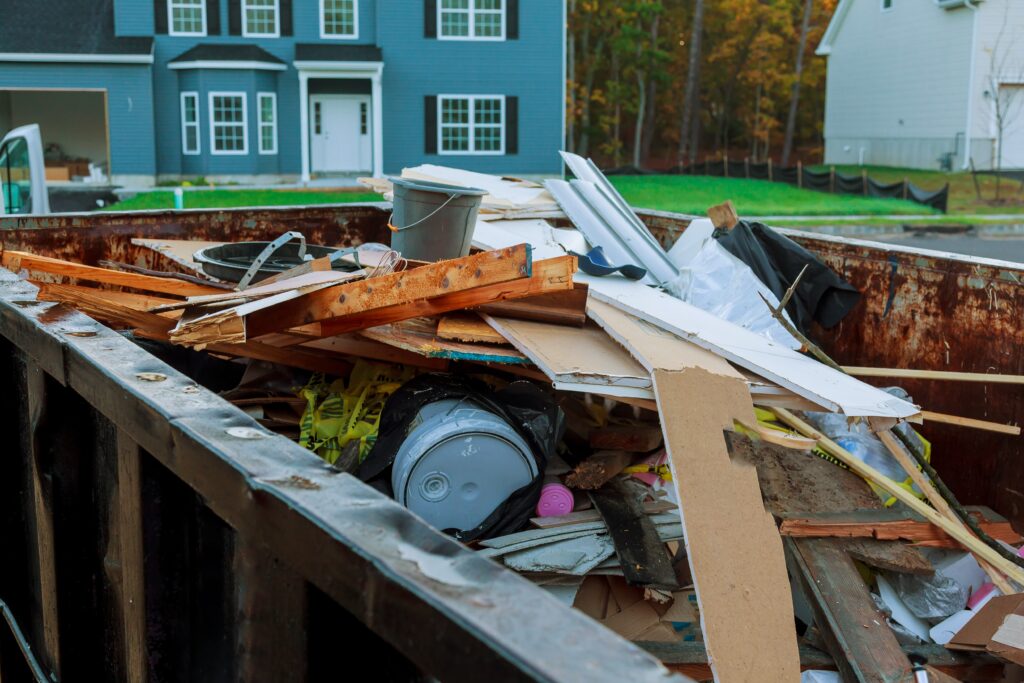
A debris pile rarely stays just a debris pile. Wood scraps, old furniture, bagged trash, and yard waste sitting against a house or out behind a shed become shelter, food, and nesting material for exactly the pests you don’t want near your home. The longer it sits, the more it costs you — not in hauling fees, but in the slow damage that follows the pests in.
What moves in first
Rodents. Rats and mice look for cover close to a food source, and a junk pile is ideal — dry pockets to nest in, protection from predators, and a short run to your garbage cans or garage. Once they’re established in the pile, the gap under your siding or the opening around a pipe is the next stop.
The one that does structural damage
Termites. Scrap lumber, old fence boards, and firewood stacked on bare ground are an open invitation. Termites feed on wood-to-soil contact, and a pile that sits for months gives a colony time to establish before moving to the structure it’s leaning against. By the time termite damage is visible in a wall or sill plate, the repair bill is usually a multiple of what removal would have cost.
The quiet multiplier: moisture
Debris traps moisture underneath it. That means:
- Mosquitoes breeding in anything that holds an inch of standing water — buckets, tires, tarps
- Roaches and ants drawn to the damp, sheltered ground layer
- Rot and mold on whatever the pile is touching, including your fence, deck, or exterior wall
What it does to your home’s value
None of this shows up overnight, which is what makes it expensive. Pest activity, wood rot, and moisture staining are exactly the kinds of findings that turn up in a buyer’s inspection report — and every one of them becomes a negotiating point against your asking price, or a repair you pay for before listing. A clean, debris-free lot costs nothing to maintain by comparison.
The fix is the easy part
Clearing the pile removes the shelter, the food source, and the moisture trap in one pass. If it’s been sitting more than a season, check the ground underneath for insect activity once it’s up — and if anything’s leaning against the house itself, move that first.
Got a pile that’s been “temporary” for a year? Tell us what’s in it and we’ll haul it off before something moves in — or before something already has.